Marriage in Ghana is more than a ceremony; it is a union between families, traditions, and generations. Among the Akan people, one of the most important customs in marriage is Tri Nsa, commonly referred to as the “Head Drink.” While many people focus on the colourful engagement ceremonies, expensive gifts, and elaborate receptions seen today, few truly understand the cultural and legal weight behind this simple but powerful tradition. In many ways, Tri Nsa remains the heart of Akan customary marriage and continues to shape how families recognise and validate unions in Ghanaian society.
For many young couples, especially those in urban areas or the diaspora, understanding this tradition helps separate cultural truth from modern misconceptions. Beyond the glamour of engagements and wedding décor, the essence of marriage in many Akan homes still begins with the acceptance of the head drink.
What is Tri Nsa?
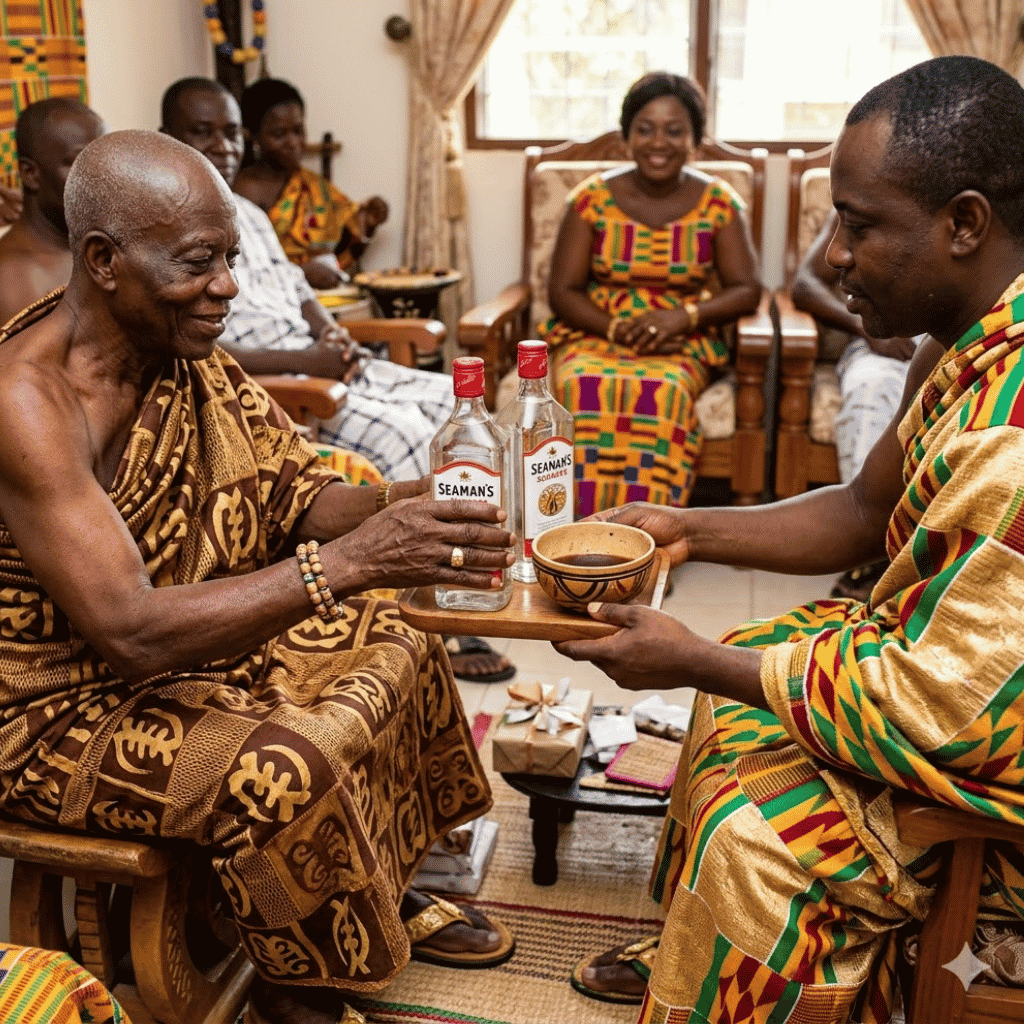
In Akan culture, Tri Nsa literally translates to “Head Drink.” Traditionally, it refers to the presentation of drinks — often alcoholic beverages or schnapps — by the groom’s family to the bride’s family during marriage rites. However, the meaning goes far beyond the physical drink itself.
The drink symbolises respect, sincerity, and the formal intention of the man and his family to seek the woman’s hand in marriage. It is not merely a gift; it is a cultural declaration that both families acknowledge and approve the union.
Historically, Akan communities used drinks because they represented goodwill and honour. Before modern engagement lists became extensive and commercialised, the offering and acceptance of the head drink were enough to establish a legitimate customary marriage.
This is why many elders still emphasise the Tiri Nsa importance in marriage discussions today. Without it, some traditional leaders and families may not fully recognise the marriage under customary law.
READ ALSO: Traditional/Customary Marriage in Ghana (Engagement)
The Cultural Significance of Tri Nsa
A Symbol of Family Acceptance
Among Akan families, marriage is never viewed as an individual affair. It is a bond between two families and, in some cases, entire communities. The presentation of the head drink formally introduces the groom’s family and demonstrates humility and respect toward the bride’s family.
Once accepted, the gesture signifies that the woman’s family has agreed to release their daughter into the marriage. This acceptance carries emotional, social, and cultural meaning that goes beyond paperwork or ceremonies.
Respect for Tradition and Elders
In many Ghanaian homes, elders play a central role in marriage negotiations. The process surrounding the head drink gives honour to parents, aunties, uncles, and family heads who guide the marriage process.
Even today, many families insist on preserving this custom because it reflects discipline, respect, and cultural identity. In a time where modern weddings often imitate Western traditions, practices like Tri Nsa help preserve the uniqueness of Akan heritage.
Preserving Ghanaian Identity
Across many Akan marriages in Ghana, traditions continue to evolve. Yet despite changing times, the essence of customary marriage remains deeply rooted in culture.
For Ghanaians living abroad, understanding these traditions also strengthens their connection to home. Many diaspora couples intentionally include customary rites in their weddings because they want to preserve family identity and honour ancestral values.
Why Tri Nsa is the Only Legal Requirement
One of the most misunderstood aspects of Ghanaian traditional marriage rites is the belief that expensive items and elaborate engagement ceremonies are mandatory for marriage validity.
In reality, under Akan customary practice, the acceptance of the head drink is often considered the central act that legitimises the marriage traditionally. The drink serves as the “signature” on the marriage contract.
The “Lists” vs. The Law: While families often provide an Asante marriage list or a Fante marriage list containing various items, many of these are cultural additions. Legally, the union is sealed by the consent of the families and the symbolic drink.
Cost-Effective Marriage: If you are looking at how to save money on a Ghanaian traditional marriage, remember that the core requirement is modest. You don’t need a 4-step wedding cake to be a husband and wife; you need the Tri Nsa.
The Legal and Customary Perspective
Customary marriage in Ghana is recognised when both families consent to the union, and customary requirements are fulfilled. In many Akan traditions, the presentation and acceptance of the head drink represent this consent.
This explains why elders often say, “Once the drink is accepted, the marriage is valid.”
While engagement lists today may include cloth, jewellery, footwear, drinks, money, and other gifts, many of these additions are cultural preferences rather than strict legal necessities.
The true foundation lies in family approval symbolised through the head drink ceremony.
Modern Misconceptions Around Marriage Rites
In recent years, social media and modern wedding culture have changed perceptions about traditional marriage. Lavish ceremonies have become popular, and some families now present extremely long engagement lists that place financial pressure on couples.
However, many cultural experts and traditional leaders continue to remind people that Akan marriage was never originally designed to burden couples financially.
The essence of marriage lies in respect, commitment, and family agreement — not extravagance.
Understanding the Tiri Nsa importance helps young couples appreciate that traditional marriage is fundamentally about unity rather than performance.

Tri Nsa in Modern Akan Marriages in Ghana
Urbanisation and Changing Traditions
In cities like Accra and Kumasi, marriage ceremonies have become more elaborate than they were generations ago. Event planning, décor, photography, and social media trends now influence how people celebrate marriages.
Yet beneath the glamour, many families still quietly uphold traditional customs. Even when ceremonies are modernised, the symbolic presentation of the head drink remains part of the process.
Some families may simplify the rite, while others maintain highly traditional procedures with spokespersons and formal family negotiations.
Religious Influence
Christianity and Islam have also influenced marriage practices in Ghana. Church weddings and religious blessings are now common additions to customary marriage.
Still, many families complete traditional rites first before proceeding to church or mosque ceremonies. This reflects the belief that customary marriage establishes the family union before religious blessings follow.
Balancing Tradition and Simplicity
Interestingly, many young couples are now returning to simpler traditional ceremonies. Rising wedding costs have encouraged people to focus more on meaningful customs rather than public display.
As conversations around financial responsibility continue, understanding Tri Nsa helps many couples realise that marriage can remain culturally valid without unnecessary pressure.
Common Questions About Tri Nsa
Is Tri Nsa Alone Enough for Marriage?
In many Akan traditions, yes. Once the head drink is presented and accepted by the bride’s family, the customary union is often recognised traditionally.
However, practices may vary slightly among different Akan subgroups and families.
What Happens After the Drink is Accepted?
Traditionally, the acceptance signifies that the woman officially becomes part of the man’s family. From that point, both families recognise the union, and the couple may proceed with celebrations, blessings, or legal registration if desired.
Can marriage happen without expensive items?
Absolutely. While the “marriage list” can sometimes be long, many families are willing to negotiate. If you are on a budget, check out our discount packages from top companies in the wedding industry to help manage the other costs, like photography and decor.
READ ALSO: Full Breakdown: Cost of a 200 Guest Wedding in Ghana 2026
Conclusion
At its core, Tri Nsa is far more than a bottle of drink presented during an engagement ceremony. It represents respect, acceptance, unity, and the formal recognition of marriage within Akan culture. While modern weddings continue to evolve, the significance of the head drink remains deeply rooted in the identity of many Ghanaian families.
Understanding the meaning behind this tradition also helps correct the growing misconception that marriage must be extravagant to be valid. In truth, the heart of many Ghanaian traditional marriage rites lies in sincerity, family agreement, and cultural honour.
As traditions continue to adapt to modern life, preserving customs like Tri Nsa ensures that future generations remain connected to the wisdom and values of Akan heritage.
If you enjoyed this article, share it with friends or family preparing for marriage, especially those interested in learning more about Akan marriages in Ghana. For more insights into Ghanaian culture, customary marriage traditions, and relationship guidance, connect with us today and continue exploring the beauty of our heritage.
At Knotting.org, we are dedicated to making your journey to the altar seamless and beautiful. We bring you the most current information on everything from Kente gown designs to marriage under ordinance vs. customary marriage.
Take the Next Step:
- Budgeting: Use our Wedding Estimator to see how much your 2026 wedding will cost.
- Discounts: Save big on rings, cakes, and gowns by visiting our Discounts Page.
- Stay Updated: Join the Love & Wedding Arena on WhatsApp for daily tips and trend alerts: Follow here.
Tri Nsa is more than just a drink; it is the heartbeat of Akan tradition. By honouring this rite, you aren’t just following a rule—you are stepping into a legacy of respect, family unity, and cultural pride.
Congratulations on your upcoming union! If you need personalised guidance on your marriage list or cultural consultations, contact us today via our website.