
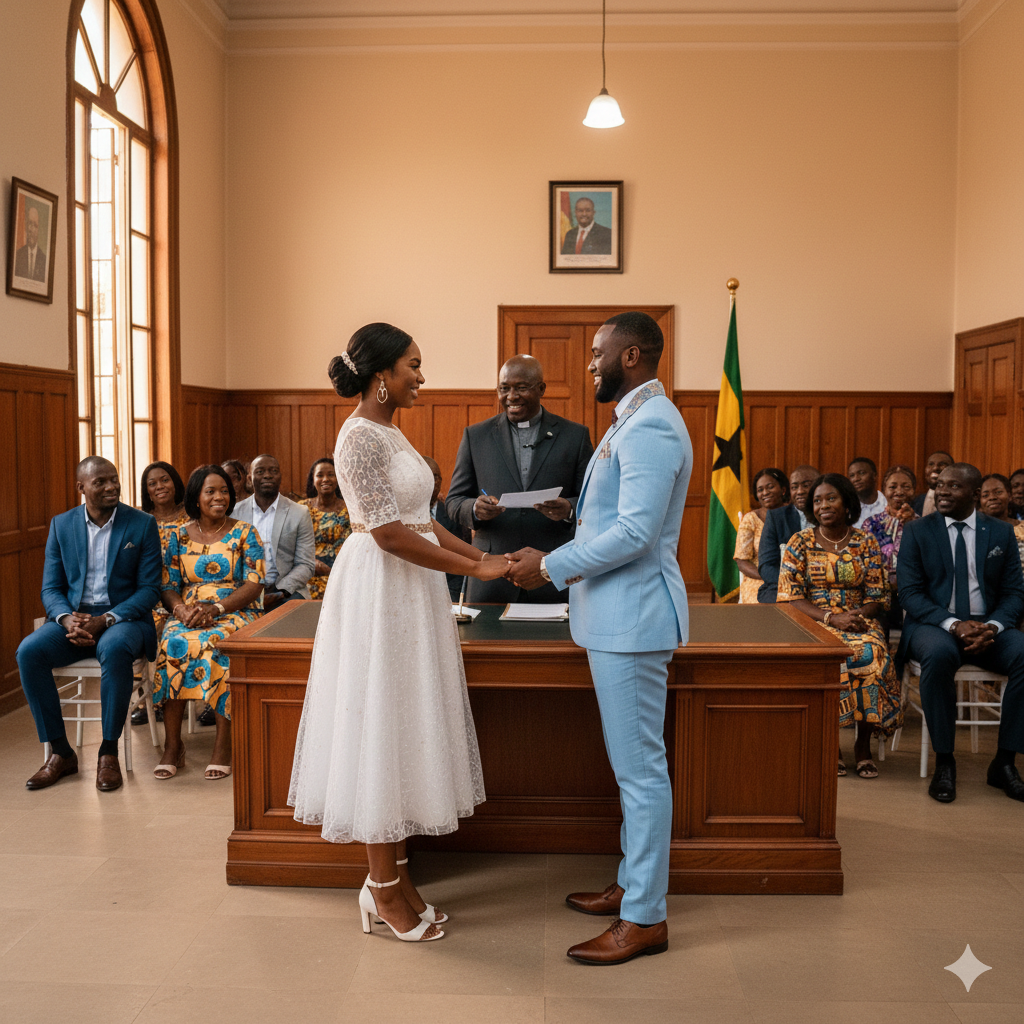
In Ghana, a civil wedding (often referred to locally as a “Court Wedding” or “Ordinance Marriage”) is a legal union governed by the Marriages Act, 1884–1985 (CAP 127).
While traditional and religious weddings are culturally significant, a civil wedding in Ghana is the primary way to ensure a marriage is recognized under Ghanaian law with specific legal protections, particularly regarding inheritance and monogamy.
Key Characteristics
- Monogamy: Unlike Customary Marriage (which allows for polygamy), an Ordinance Marriage is strictly monogamous. Once registered, neither party can legally marry someone else without first obtaining a divorce.
- Location: It can take place at the Registrar General’s Department, a Municipal/District Assembly, or a licensed religious building (like a church) by a licensed marriage officer.
- The Certificate: The couple receives a “Form E” marriage certificate, which is the legal proof of the union.
The Legal Process
The process typically follows these steps:
- Notice of Marriage: The couple files a “Notice of Marriage” at the Registrar’s office in the district where one of them has resided for at least 15 days.
- The 21-Day Rule: The notice is posted on the office’s notice board for 21 days. This is to allow members of the public to raise any legal objections (caveats).
- Registrar’s Certificate: If no objections are raised after 21 days, the Registrar issues a certificate that allows the couple to marry within three months.
- The Ceremony: The ceremony itself is brief. It involves the couple, two witnesses, and the Registrar. They exchange vows and sign the marriage register.
Requirements
To get married under the Ordinance in Ghana, you generally need
- Identification: Valid ID (Ghana Card, Passport, etc.) for both partners.
- Witnesses: Two witnesses (one for each side).
- Affidavits: Sworn statements confirming that both parties are of legal age and are single/divorced.
- Fees: A processing fee is paid to the Metropolitan, Municipal, or District Assembly (MMDA).
- Why Couples Choose It
In Ghana, many couples perform a “double” ceremony: the Traditional Wedding (the “Knocking” and engagement) to satisfy family and cultural rites, followed by the Civil/Ordinance Wedding to secure legal rights.
The Ordinance provides clear protections under the Intestate Succession Act (PNDCL 111), which dictates how property is distributed if a spouse passes away without a will—giving the surviving spouse and children stronger legal standing compared to some traditional customs.
Would you like me to look up the current registration fees for the Accra Metropolitan Assembly or help you draft a checklist for the ceremony?
As the only platform in Ghana offering exclusive discount packages from top wedding vendors, we make luxury weddings attainable. If you’re navigating the legalities of a civil wedding, these FAQs will provide the clarity you need to transition from “Miss” to “Mrs.” smoothly.
FAQs: Civil Weddings in Ghana
1. What is the difference between a “Marriage under Ordinance” and a Customary marriage?
In Ghana, a Marriage under Ordinance (civil marriage) is strictly monogamous and governed by the Marriages Act (1884-1985). Unlike Customary marriage, which allows for polygamy under certain traditions, a civil marriage offers specific legal protections regarding inheritance and divorce under the laws of Ghana.
2. Where do I go to register for a civil wedding in Accra or Kumasi?
You must register at your local Municipal or District Assembly (often called the Registrar of Marriages). For instance, many couples in the capital head to the Accra Metropolitan Assembly (AMA).
3. How much does a civil marriage license cost in Ghana in 2026?
Prices vary slightly by District Assembly, but you should budget between GH₵ 500 and GH₵ 1,200 for the filing of the Notice of Marriage and the issuance of the Registrar’s Certificate.
4. What documents do we need to provide?
You typically need:
- Valid National IDs (Ghana Card).
- Passport-sized photographs.
- Two witnesses (one for the groom, one for the bride).
- An affidavit of single status if you were previously divorced or widowed.
5. What is the “21-Day Notice” period?
Once you file your intent to marry, the law requires a 21-day public notice to be posted on the Assembly’s notice board. This is to ensure there are no legal “impediments” (objections) to your union. If no one objects after 21 days, you are cleared to wed.
6. Can we skip the 21-day wait?
Yes, you can apply for a Special License. This waives the 21-day waiting period, allowing you to marry almost immediately. This attracts a higher fee but is perfect for couples traveling from the diaspora with limited time.
7. Does a civil wedding replace the Ghanaian “Knocking” or Traditional Marriage?
Legally, yes, a civil marriage is a complete legal union. However, culturally, most Ghanaians still perform the Knocking (Kokooko) and the Traditional Marriage (Engagement) first to satisfy family rites and “Tri Nsa” traditions before heading to the Registrar or Church.
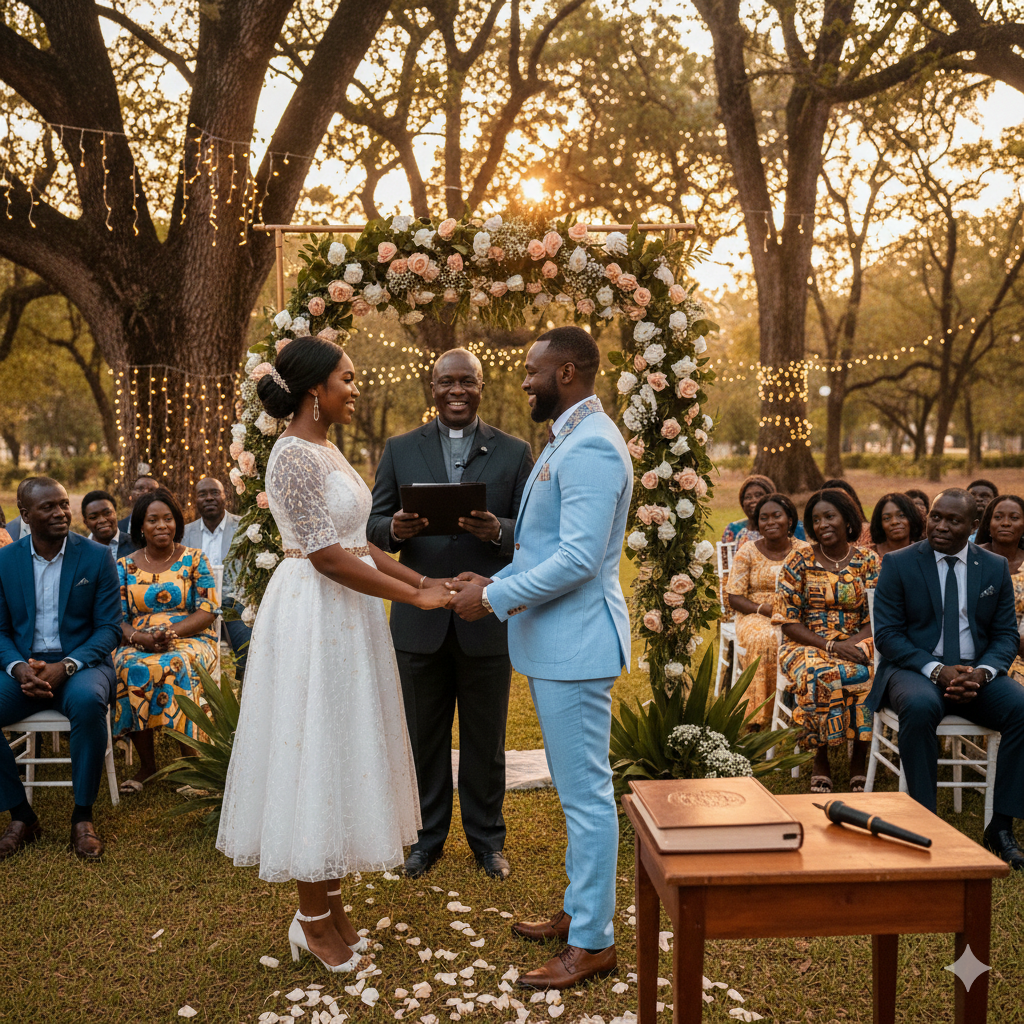
8. Can we have our civil ceremony at a private venue like a garden or beach?
Yes! While most civil ceremonies happen at the Registrar’s office, you can request the Registrar to officiate at a licensed private venue (like a garden in East Legon). This usually involves paying a “location fee” and providing transportation for the official.
9. What should the bride wear for a civil ceremony?
The 2026 trend for civil weddings is “Minimalist Elegance.” Many Ghanaian brides opt for a white midi-dress, a sophisticated jumpsuit, or a “Gold Dust” themed Kente pencil dress. If you need a gown but want to save, check out affordable bridal boutiques for gown rentals in Ghana.
10. How do I change my name after the civil wedding?
Once you receive your Marriage Certificate, you must sign an affidavit and Gazette the change of name. These processes are not straight forward. Get more details here on how to go about a change of name in Ghana.
Plan Your Budget with Ease
Not sure how much to set aside for your civil ceremony and reception? Use our Free Wedding Estimator Tool to get an instant breakdown of your costs based on 2026 market prices.
Stay in the Loop
Don’t miss out on the latest “Akonta Sekan” price updates or Kente style inspirations. Follow the Love & Wedding Arena channel on WhatsApp for daily tips and vendor deals!